Captain Ville Tuomainen’s 2026 Hornet Solo Is a Cohesive and Dynamic Performance
Introducing the Air Force F/A-18 Hornet display pilot 2026 Captain Ville Tuomainen from Karelia Air Wing.
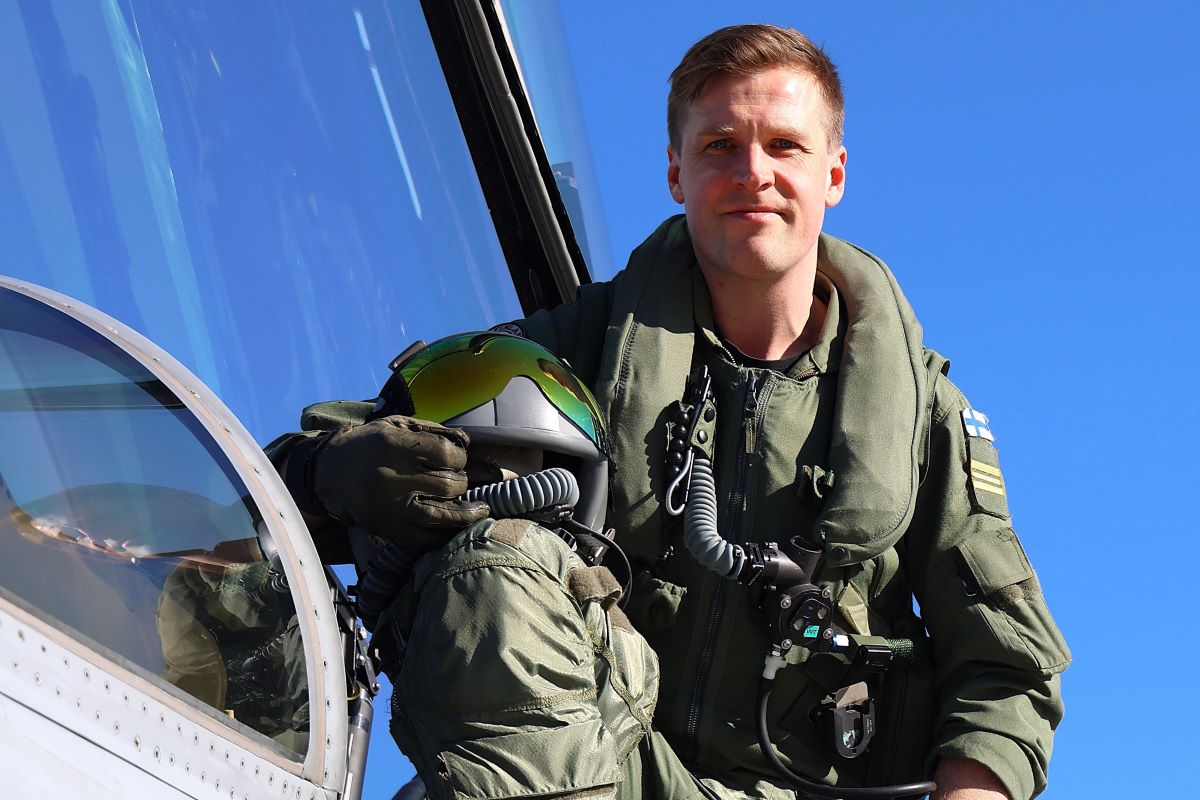
Captain Ville Tuomainen serves at Karelia Air Wing as the leader of the Weapon Tactics Section of Fighter Squadron 31 and as an air combat instructor. Tuomainen has flown the Hornet since 2015, reaching one thousand flight hours at the beginning of this year.
In addition to his regular duties, Ville Tuomainen will be seen this year as the Finnish Air Force’s display pilot, once again delivering an impressive Hornet solo. The season’s backup display pilot is Captain Joni Kouva from Lapland Air Wing.
• Finnish Air Force’s 2026 display pilot
• From Tampere
• Rank: Captain
• Serves in Fighter Squadron 31 at Karelia Air Wing
How did you become a fighter pilot?
I became interested in aviation during high school, when a former Hornet pilot who had originally brought the Hornets to Finland lived next door. Of course, he was much older—around my father’s age—but it sounded impressive and sparked my interest in the profession. That led me to apply to the aviation high school in Tikkakoski, and I also obtained a glider pilot license at the age of 16.
In Tikkakoski, I saw Finnish Air Force training aircraft and operations for the first time and became really excited about it. I applied to pilot training in 2009, was accepted, and from there my appetite grew with experience—and here I am today.
What is it like working at Karelia Air Wing?
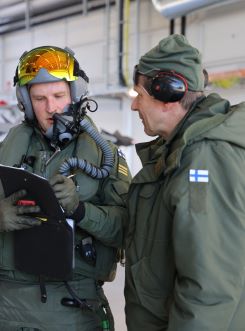
As a work community, we are very close-knit. What unites us is a strong commitment to always do our best in the tasks we are given. We have team spirit, and it shows in everyday cooperation with maintenance, the control and reporting center, and other units. You get to know people well here and share both the good and the challenging moments together.
You serve as a display pilot alongside your regular duties. What is a typical day like in the squadron?
The day starts with a morning briefing—similar to a meeting—where we go through weather, aircraft availability, and flight assignments.
Our day consists of about three flight waves, involving instructors, students, and often also reservists—experienced pilots working in Air Force Command staff officer positions. On average, my day includes one flight mission, which takes two to three hours including preparation and briefing. The flight itself lasts about an hour, followed by a one-to-two-hour debrief.
The rest of the day is spent on research and development as well as administrative duties.
What is it like working as a Finnish Air Force fighter pilot?
It’s a very diverse profession. In addition to the core routine—briefing, flying, and debriefing—there are many development projects and initiatives.
The job also includes national and international exercises, and, due to NATO, more and more international cooperation. The scope of work is very broad, and there are always new challenges to take on based on your interests.
Changes in the security environment affect everyone. As a fighter pilot you have a clearly defined role, but what matters in daily life right now?
Today, uncertainty about the future—and constant changes around us—reinforces the idea that a strong work community can handle almost any situation.
It’s important to ensure we don’t burn ourselves out and that no one is left struggling alone—we support each other when needed. Maintaining a healthy work culture is crucial, because no fighter jet flies thanks to a single pilot; there is a large team behind it, and seamless cooperation is essential.
How does it feel to be this year’s display pilot?
I had dreamed about becoming a display pilot for years, so it was really exciting to take on this role. Last year, I trained using another pilot’s routine, which allowed me to gradually develop my own ideas about what I liked and what I wanted to include this year.
It’s interesting to see how audiences will react to my show. Last year, as the backup display pilot, I also flew at international airshows and got a taste of the atmosphere. Flying a Hornet solo is like a sports performance: there’s intense anticipation and pressure at first, but once the performance starts, you’re fully focused. After completing a successful show, you feel a sense of euphoria.
The Hornet solo is impressive—what aircraft characteristics make it possible?
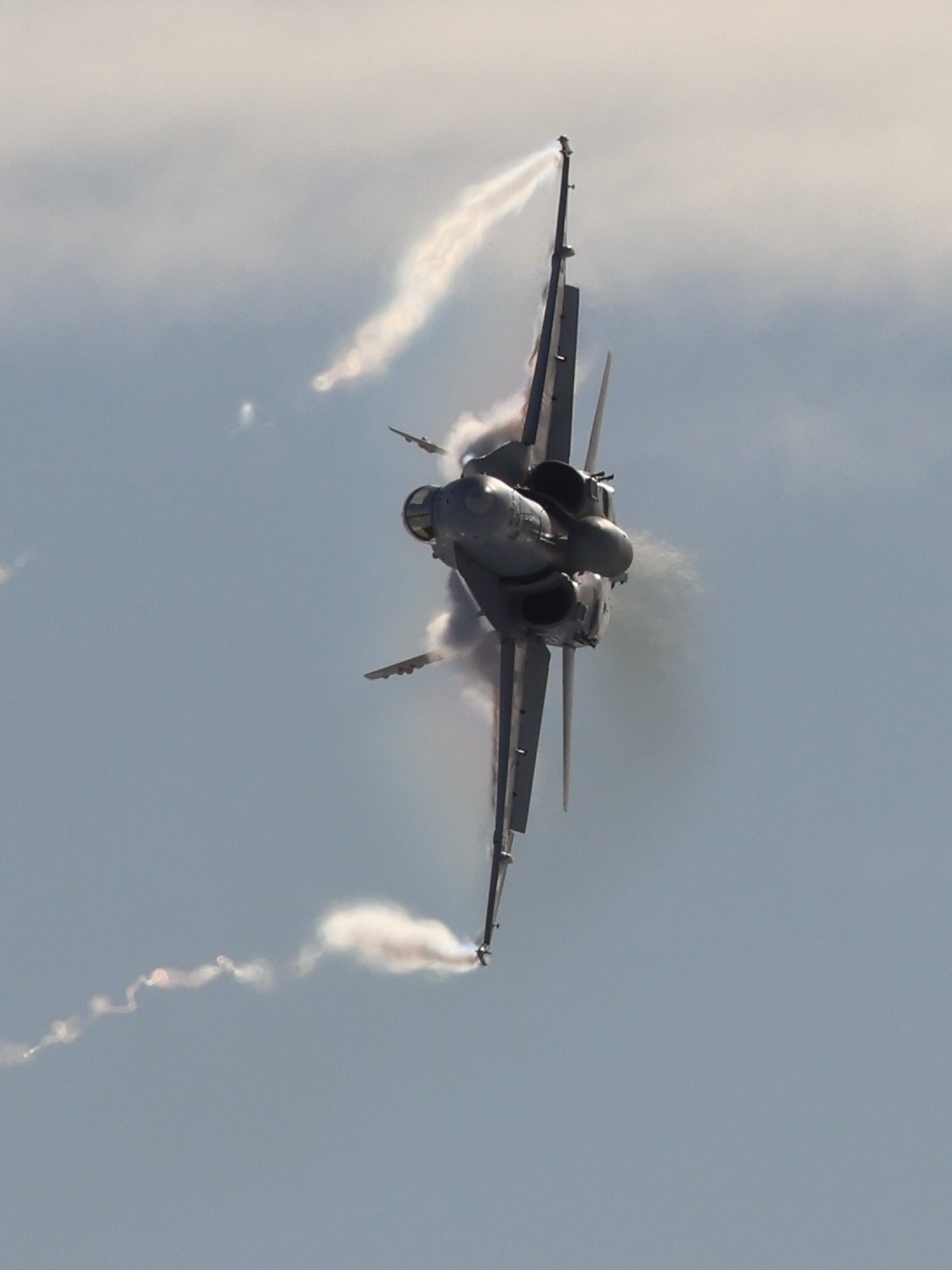
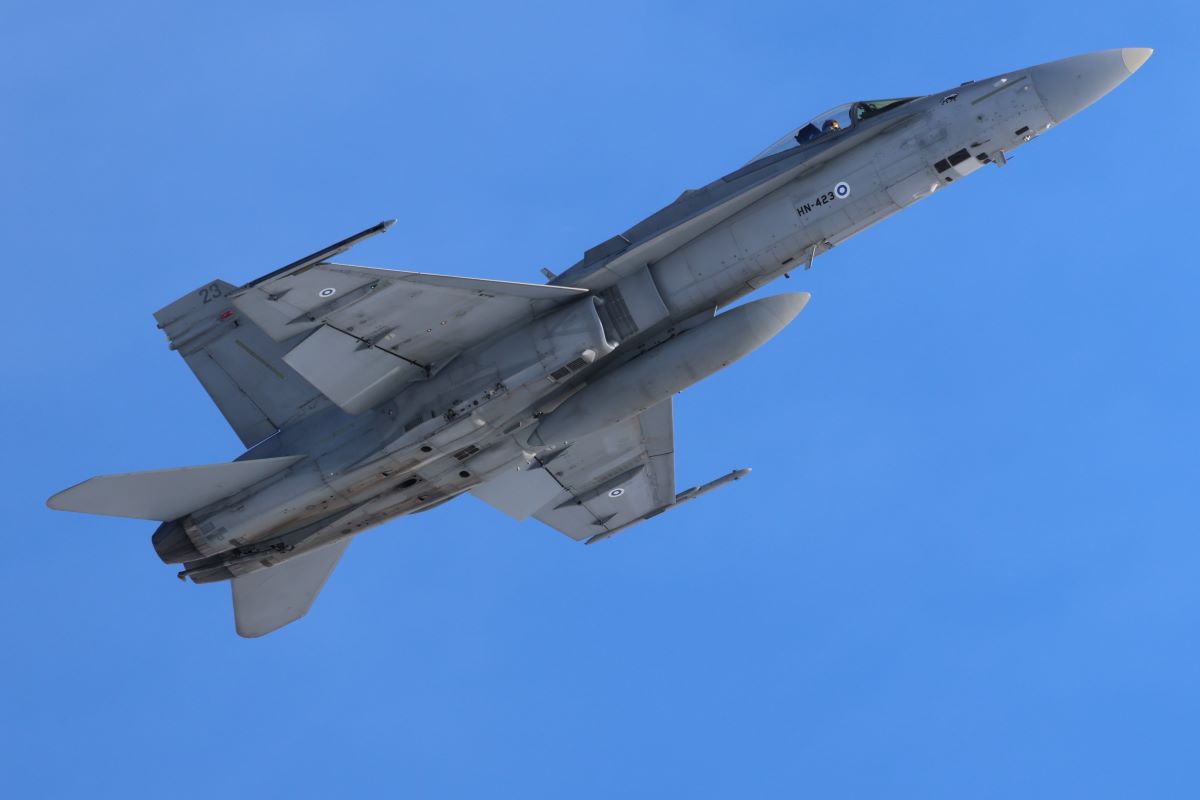
The Hornet’s strengths are agility, power, and controllability at the limits. These qualities make the display so visually striking.
The twin-engine fighter provides raw power, which is also audible. Its controllability at extreme limits enables aggressive maneuvers where speed drops suddenly and the nose moves dramatically.
Agility allows flying in a confined space at high angles of attack, which can be seen in the vapor forming over the wings. In my routine, I aim to emphasize how agile the aircraft is even in a very small display area.
What kind of Hornet solo have you designed for this year?
I wanted the program to feel dynamic and cohesive, with a strong opening and ending. In the middle, I included my favorite maneuvers—the “Hat” (also known as the Cobra) and the “Frisbee.”
This year’s routine also features a new maneuver: a gun defence move used in air combat. It demonstrates extreme aircraft performance, where speed rapidly drops from 600 km/h to below 200 km/h within seconds.
How do you prepare? Do you have specific routines?
I admit I always feel some nerves before a performance—and that’s probably healthy. I focus on managing it. At home in Kuopio, I usually fly the routine in a simulator beforehand, even though it’s familiar.
When a simulator isn’t available—such as abroad—I rehearse mentally. If you see me at an airshow with my eyes closed, moving my hands, that’s my mental rehearsal.
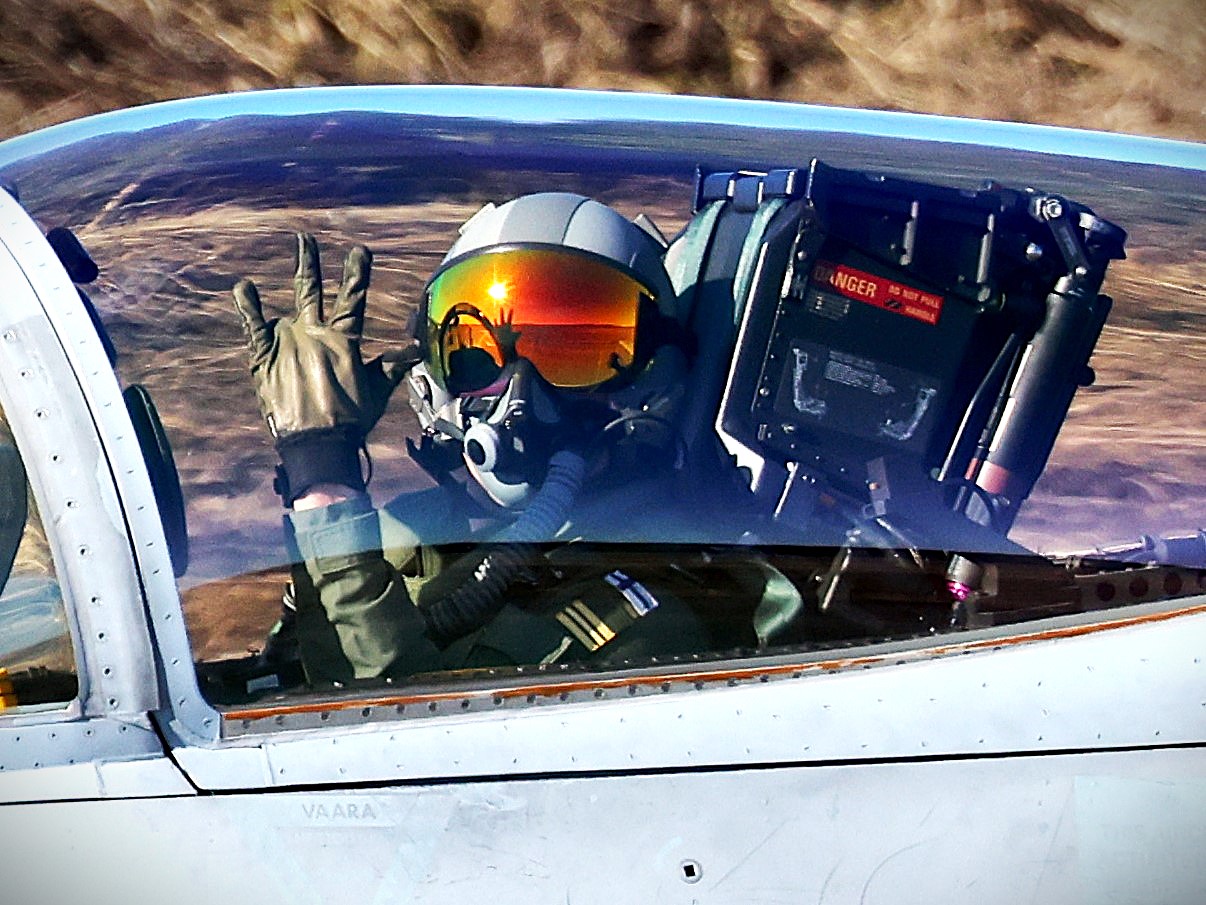
I also have a physical preparation routine. Once in the cockpit, I test my circulation and oxygen systems using the G-suit and perform pressurization checks with oxygen.
What sport would you compare the Hornet solo to?
I like ice hockey, and it’s an easy comparison. The solo is like one high-intensity shift where you give your best performance, then come off the ice. It’s short but close to maximum effort. Afterward, you recover and think about how to improve next time.
Fighter pilots’ personal and physical requirements interest many people. What personal qualities have supported your career?
Sports have always been part of my identity. One key strength is the ability to stay focused under pressure and physical strain.
Like in team sports, you must consider others and work closely with your team. At the same time, like in individual sports, you are responsible for your own performance—so self-direction and self-coaching are essential.
Most importantly, you must always strive to improve. Still, I want to emphasize that this is team effort—the work community is one of the most important reasons I’m here.
You’ve already participated in international airshows—what stands out?
At the very least, the large crowds and great atmosphere. Airshows have a completely different feeling compared to everyday work.
You meet international colleagues doing the same job, and sharing experiences is very valuable. You also realize that, regardless of nationality, many challenges are the same.
I also look forward to meeting people interested in applying to the Air Force. I’ve had the same doubts myself, so it’s rewarding to encourage and help where I can. It’s also fun to meet enthusiastic spectators and discuss their observations—whether they’re accurate or not.
Finnish Air Force Hornet Solo – 2026 Schedule:
• 7 May – Careers in Military Aviation event, Air Force Academy, Jyväskylä
• 12 May – Careers in Military Aviation event, Satakunta Air Wing, Pirkkala
• 17–19 July – Royal International Air Tattoo, United Kingdom
• 20 August – Careers in Military Aviation event, Lapland Air Wing, Rovaniemi
• 22–23 August – Swedish Air Force 100th Anniversary Air Show 2026, Sweden
• 5–6 September – Athens Flying Week International Air Show 2026, Greece
The schedule is subject to change. All flight operations are weather dependent.
Read more about the Finnish Air Force display season 2026:
Trust in the Diamond-Strong Midnight Family
Midnight Hawks
Introducing the Air Force's Hawk display pilot for the season 2026
Follow the Finnish Air Force and display flying activities on social media:
Facebook @ilmavoimat
X @FinnishAirForce
Instagram @ilmavoimat
Follow the Karelia Air Wing
Updated on 12 May 2026: Links to the Midnight Hawks and Hawk solo articles added.


