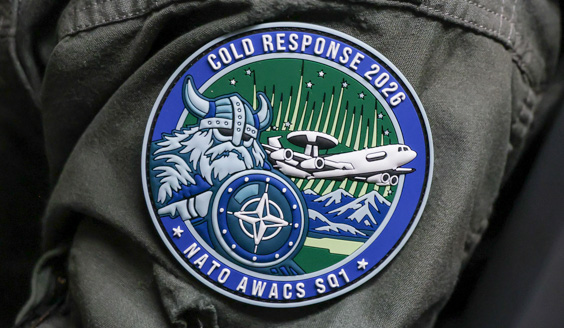
Command and Control Over the North
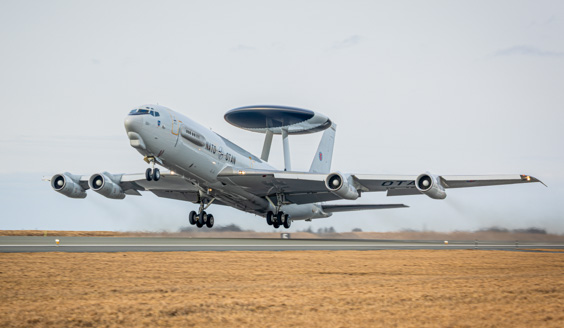
The flight operations of Exercise Cold Response 26 involve not only fighter aircraft but also NATO’s E-3A Sentry AWACS aircraft, operating from Ørland, Norway.
During Cold Response 26, NATO's E-3A Sentry AWACS (Airborne Warning & Control System) serves as a tactical-level command and control platform. Using its radar, AWACS can detect targets at ranges of several hundred kilometers and build a recognized air picture for all participating units and stakeholders in the exercise. In addition, the surveillance aircraft directs participating aircraft, including fighters, and provides them with critical information required to accomplish their missions.
NATO AWACS takes part in exercises such as Cold Response to train operations in complex and dynamic scenarios within a joint environment comprising multiple units. Due to the large number of aircraft involved, these exercises also have significant training value. They provide weapons controllers with an important opportunity to practice the control and coordination of fighter aircraft under realistic operational conditions.
Among the AWACS airborne crew is Finnish Master Sergeant Aleksi Härkönen. He describes the exercise as an opportunity to challenge himself, as the number of aircraft to be controlled is large and joint multi-domain operations are complex.
“This is a key major annual exercises I get to participate in, so it is naturally significant. It brings together world-class professionals and highly advanced fifth-generation fighters, which pushes you to perform at your best. A big part of the exercise entails planning operations as well as careful mission briefings and debriefings afterwards. A steep learning curve is already evident even while the exercise is still ongoing,” Härkönen says.

The home base of NATO AWACS is in Geilenkirchen, Germany, and besides Norway, forward operating locations (FOLs)—where the necessary conditions have been established for AWACS aircraft to deploy and operate—are located in Greece, Italy, and Turkey. Northern winter conditions create a strong contrast to the southern operating environment, and AWACS must be capable of operating in a wide range of environments.
In winter conditions, flight operations may be affected by wind, snow, ice, cold temperatures, and low visibility. These factors challenge aircraft performance and require additional planning as well as specific operating procedures.
“This applies not only to us, but to all units operating in the area. Hence, planners and air and ground crews must adapt their activities and coordinate carefully to ensure missions can be carried out safely and efficiently,” Härkönen explains.
Weather conditions are unpredictable, so everything must be anticipated. For example, when scheduling takeoffs, possible de-icing procedures as well as the time required for runway and taxiway maintenance must be taken into account.
“Here at FOL Ørland, the facilities for preparing for weather conditions are excellent. In addition, the personnel are well prepared and trained for all weather conditions.”
NATO allies share common procedures and standardized operating models. These enable all participants to benefit from synergy, even though the allies have different ways of operating and varying capabilities on the battlefield. Exercises such as Cold Response provide an opportunity to further develop procedures and interoperability, allowing for more effective operations across different scenarios.
“When controlling different types of fighter aircraft from multiple countries, you must consider the differences in their performance and technical characteristics. These can impact mission planning, operations and the task in the air, and the effectiveness of the overall operation, and thus require special attention from us on AWACS,” Härkönen notes.
NATO is continuously increasing its focus on the northern and Arctic regions. During the Cold Response exercise, AWACS also monitors the regional situation and provides information to decision-makers as part of the eVA Arctic Sentry activity, conducted under the authority of Joint Force Command Norfolk. Arctic Sentry highlights NATO’s readiness and resolve to defend the entire Alliance territory.